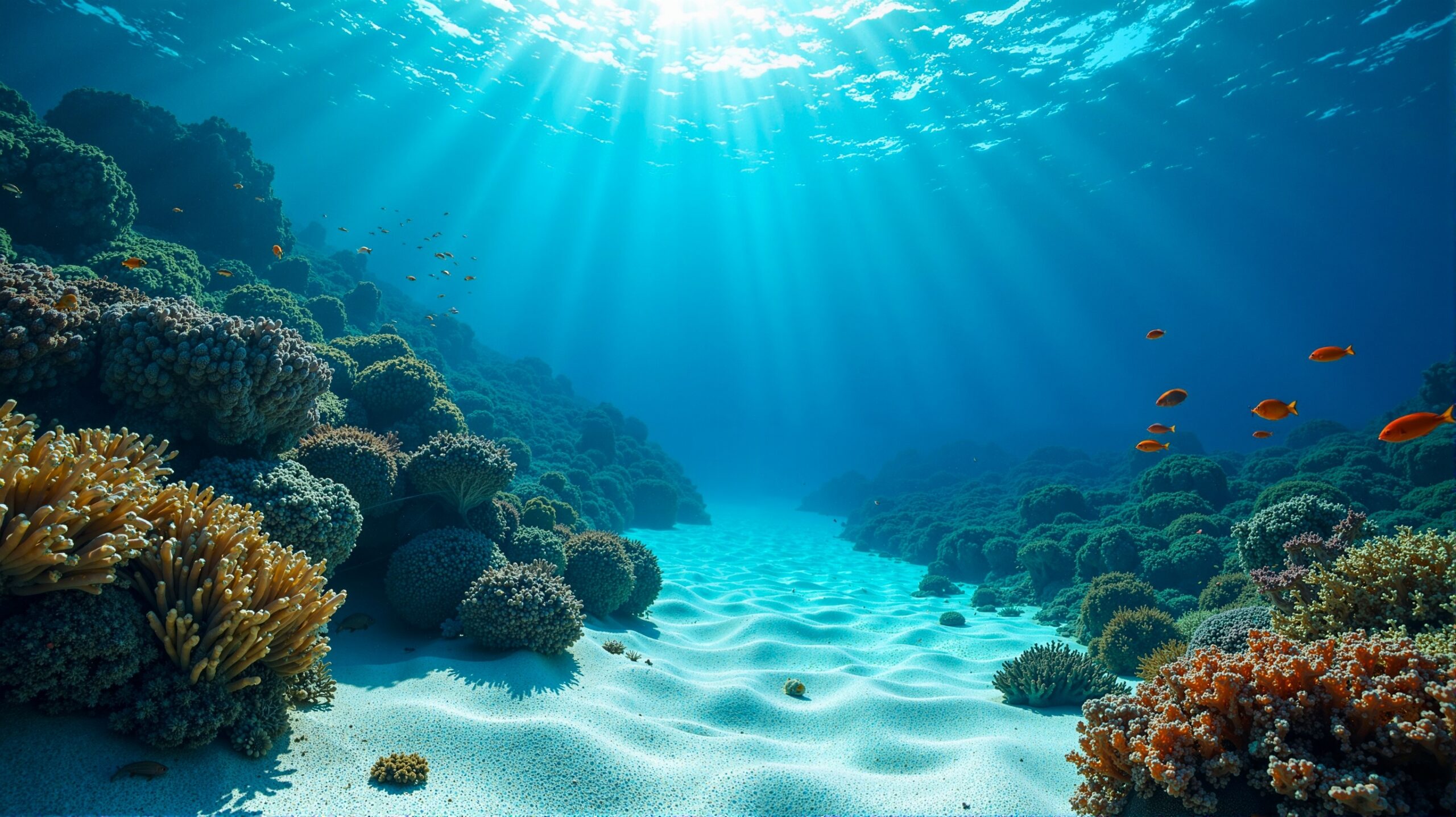
The world’s oceans have failed a major planetary health check for the first time, with scientists warning that rising acidity caused by fossil fuel burning has pushed marine ecosystems beyond safe limits.
The 2025 Planetary Health Check from the Potsdam Institute for Climate Impact Research reported that ocean surface pH has dropped by 0.1 units since the industrial era, a 30–40% increase in acidity. This has dire consequences for cold-water corals, tropical reefs and Arctic marine life.
When carbon dioxide enters the sea, it forms carbonic acid, which reduces calcium carbonate, essential for organisms such as corals, clams and molluscs. This impact ripples up the food chain, threatening salmon, whales and ultimately human food security.
The report identifies ocean acidity as the seventh of nine planetary boundaries to be breached, alongside climate change, biosphere integrity, land use change, freshwater use, biogeochemical flows and novel entities. Scientists warn this could weaken the ocean’s role as a vital carbon sink and heat regulator.
Levke Caesar of the Planetary Boundaries Science Lab said the findings left her “afraid”, noting that while atmospheric gases mix within a year, it takes a thousand years for the ocean to stabilise.
The authors emphasised that urgent fossil fuel reduction, better fisheries management and pollution control could still reverse the decline. They pointed to global successes such as the Montreal Protocol and ozone recovery as proof that international action can work.
Institute director Johan Rockström said: “Even if the diagnosis is dire, the window of cure is still open. Failure is not inevitable; failure is a choice.”