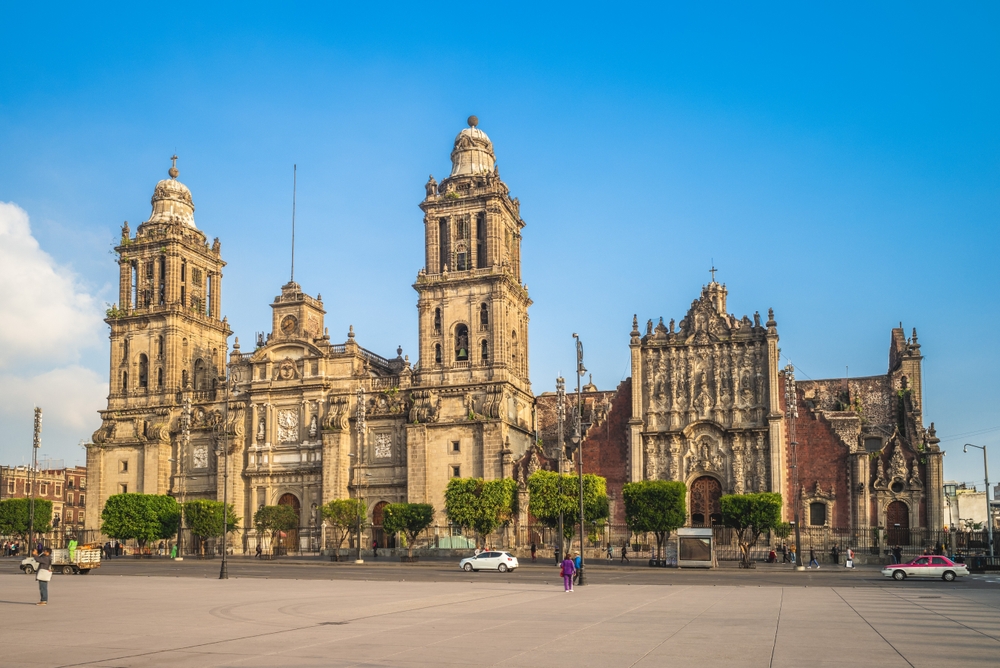
Thousands of young people filled Mexico City’s streets on Saturday to protest violence, corruption, and government inaction. The demonstration, which also took place in 52 Mexican cities and abroad—including the U.S., Canada, Germany, and the Netherlands—ended violently at the Zócalo, leaving 20 civilians and more than 100 police officers injured, with around 20 arrests.
The protests erupted after the 1 November murder of Uruapan mayor Carlos Manzo, who had repeatedly urged federal authorities to confront organized crime in Michoacán. His killing became a flashpoint for a generation frustrated with a system they consider corrupt, violent, and unresponsive.
The march united students, activists, villagers, opposition party members, and concerned citizens, all calling for accountability and structural change. Security officials reported that while the protest began peacefully, tensions escalated as it reached Mexico City’s central square.
From Peaceful Demonstration to Chaos at the Zócalo
The march remained calm until protesters approached the National Palace. Members of the “black bloc” broke from the crowd, striking metal barricades with stones and hammers, forcing police to respond with tear gas and fire extinguishers.
Authorities treated 60 police officers at the scene and transported 40 to hospitals, with four requiring specialized care. Paramedics attended 20 injured civilians.
Officials detained several individuals for violent conduct and are reviewing footage to identify additional participants. President Claudia Sheinbaum called for peaceful protests, emphasizing dialogue over violence, while downplaying the turnout despite thousands of demonstrators.
Generation Z Presents a Bold Vision for Mexico
Mexico’s Generation Z defines itself as non-partisan, civic-minded, and determined to break free from traditional political labels. Their message: “We are not left or right; we are citizens demanding a country that listens.”
Prior to the march, the group unveiled a revised 12-point action plan to address systemic problems:
- Establish citizen councils to oversee local and national public institutions.
- Introduce transparent budget tracking and public audits at every government level.
- Empower communities to co-manage local security and reduce militarized policing.
- Create youth councils to influence education, housing, and employment policy.
- Implement binding citizen-initiated referendums on major policy decisions.
- Require independent ethics boards for all public office appointments.
- Promote community-led environmental protection and sustainable urban planning.
- Expand access to apprenticeships, vocational programs, and university scholarships.
- Guarantee protections against eviction and gentrification for vulnerable communities.
- Strengthen anti-corruption investigations with citizen participation in oversight.
- Ensure transparent electoral procedures and monitor party compliance with civic rules.
- Launch nationwide consultations to update and refine citizen-led policy proposals.
Generation Z protests in Mexico mirror global youth movements in Nepal, Mongolia, Togo, Madagascar, Morocco, Paraguay, Peru, Bangladesh, and Indonesia. Young people leverage social media platforms like TikTok, Instagram, and X to organize large-scale actions without relying on traditional media.
Economic hardship, corruption, limited opportunities, and declining living standards fuel these movements worldwide. In some countries, youth protests have toppled governments. In Mexico, this generation calls for nothing less than a full reimagining of governance, accountability, and public participation.