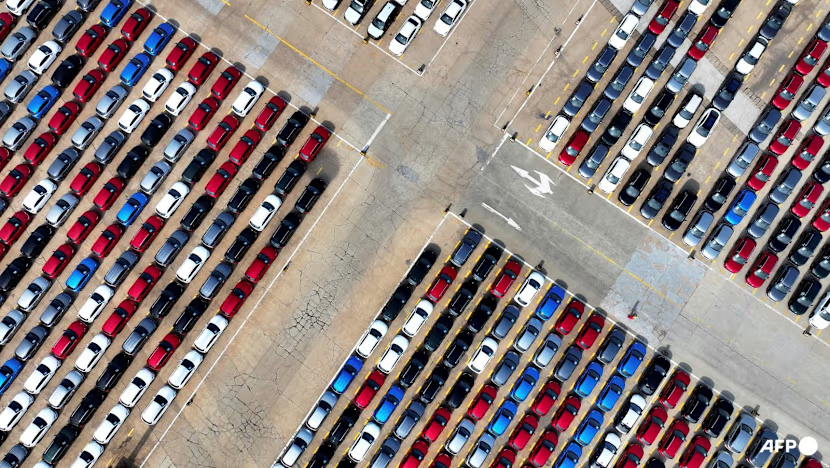
Mexico announced on Wednesday that it will raise tariffs on cars from China and other Asian countries to 50%. The move is part of a broad update to import duties designed to protect jobs and domestic industries. Analysts say it may also help Mexico align with U.S. trade interests.
The Economy Ministry stated that the changes will affect multiple sectors, including automobiles, textiles, and steel. The new tariffs are expected to impact $52 billion in imports.
Economy Minister Marcelo Ebrard said the current tariff on Chinese cars is 20%. He confirmed the new rate would rise to the highest level allowed under World Trade Organization rules. “Without a certain level of protection, you almost can’t compete,” he told reporters.
Ebrard said the tariffs aim to protect jobs in Mexico. He explained that Chinese cars were entering the local market at prices below what Mexico calls “reference prices.” The government hopes higher tariffs will prevent domestic industries from being undercut by cheaper imports.
The plan still needs approval from Congress, where the ruling party holds a strong majority. If passed, it will mainly target countries without trade deals with Mexico, including China, South Korea, India, Indonesia, Russia, Thailand, and Turkey.
The Economy Ministry document said the new tariffs will affect 8.6% of all imports. It also estimates that the measures will protect 325,000 industrial and manufacturing jobs.
The increase is not limited to cars. Steel, motorcycles, and toys will face a 35% tariff, while textiles will see duties ranging from 10% to 50%. Officials say these measures are necessary to create a level playing field for local producers.
China criticized Mexico’s decision, calling it coercive. A Chinese Foreign Ministry spokesperson said restrictions under “various pretexts” are unacceptable and urged Mexico to work toward global economic recovery and trade development. “We will resolutely safeguard our own rights and interests,” the spokesperson said.
Mexico’s announcement comes as the United States encourages Latin American countries to limit economic ties with China. The U.S. is concerned about China’s growing influence in the region and supports policies that favor local production.
Experts say the move could have mixed effects. It may protect jobs and industries in Mexico, but it could also raise costs for consumers. Imported goods like vehicles and industrial materials may become more expensive due to higher tariffs.
Some analysts see the policy as a strategy to balance domestic and international interests. By keeping the tariffs within WTO limits, Mexico avoids major trade conflicts while responding to U.S. concerns about China’s influence in Latin America.
Officials emphasize that the plan is part of a larger effort to strengthen Mexico’s industrial sector. By increasing tariffs on imports that compete with local products, the government hopes to attract investment in domestic manufacturing and secure more stable jobs.
If Congress approves the plan, it will mark a major change in Mexico’s tariff system. The government believes it will enhance competitiveness for local companies and protect workers in key sectors.
In summary, Mexico’s plan to raise car tariffs on China to 50% aims to protect local jobs, strengthen industry, and respond to global trade pressures. The move highlights the government’s efforts to balance economic growth with international trade rules and regional political pressures.