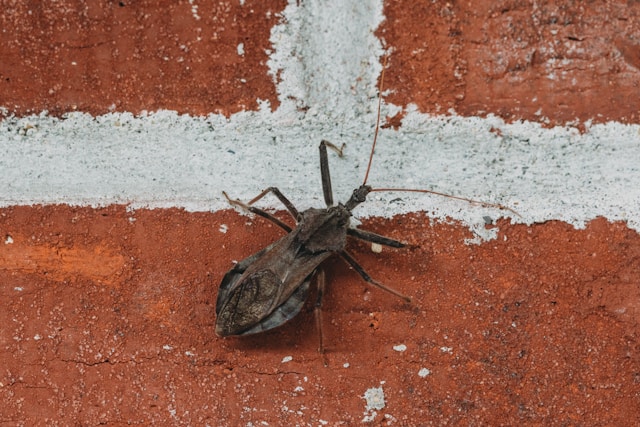
WASHINGTON, Sept 9 — The Centers for Disease Control and Prevention has classified Chagas disease, a parasitic infection spread by triatomine insects—commonly known as “kissing bugs”—as endemic in the United States. Once largely confined to Latin America, the disease is now appearing consistently in multiple regions across the country.
Chagas disease is caused by the parasite Trypanosoma cruzi, which is transmitted when infected kissing bugs bite humans, typically around the face, and then defecate near the wound. The parasite can enter the body when the bite area is scratched. Additional, though less frequent, routes of infection include blood transfusions, organ transplants, congenital transmission, and consumption of contaminated food or drink.
While many U.S. cases remain imported, health officials have confirmed local transmission in at least eight states: Texas, California, Arizona, Louisiana, Tennessee, Missouri, Mississippi, and Arkansas. Triatomine bugs have been documented in 32 states, predominantly in the southern half of the nation.
The illness develops in two distinct stages. During the acute phase, symptoms may be mild or absent, but can include fever, fatigue, headaches, swelling near the bite, rash, or nausea. Without treatment, the chronic phase can emerge years later, leading to severe heart conditions—including enlargement, irregular heartbeat, and potential sudden death—as well as gastrointestinal complications affecting the esophagus and colon.
Two antiparasitic medications, benznidazole and nifurtimox, are available to treat Chagas disease and are most effective during the early stage of infection. No vaccine currently exists. Preventive strategies focus on minimizing contact with kissing bugs through measures such as sealing homes, wearing protective clothing, using insect repellents, and avoiding handling the insects directly.
Experts emphasize that Chagas remains widely underdiagnosed in the United States, with fewer than 2% of infected individuals aware of their condition. Recognizing the disease as endemic is expected to strengthen surveillance, improve physician awareness, and facilitate earlier diagnosis.
With changing climates and human expansion into rural areas, the range of kissing bugs is increasing, prompting the CDC to urge vigilance in regions where the insects are most active.
Chagas disease, once considered a foreign concern, is now firmly established in parts of the U.S., highlighting a growing public health challenge and the importance of awareness and prevention.