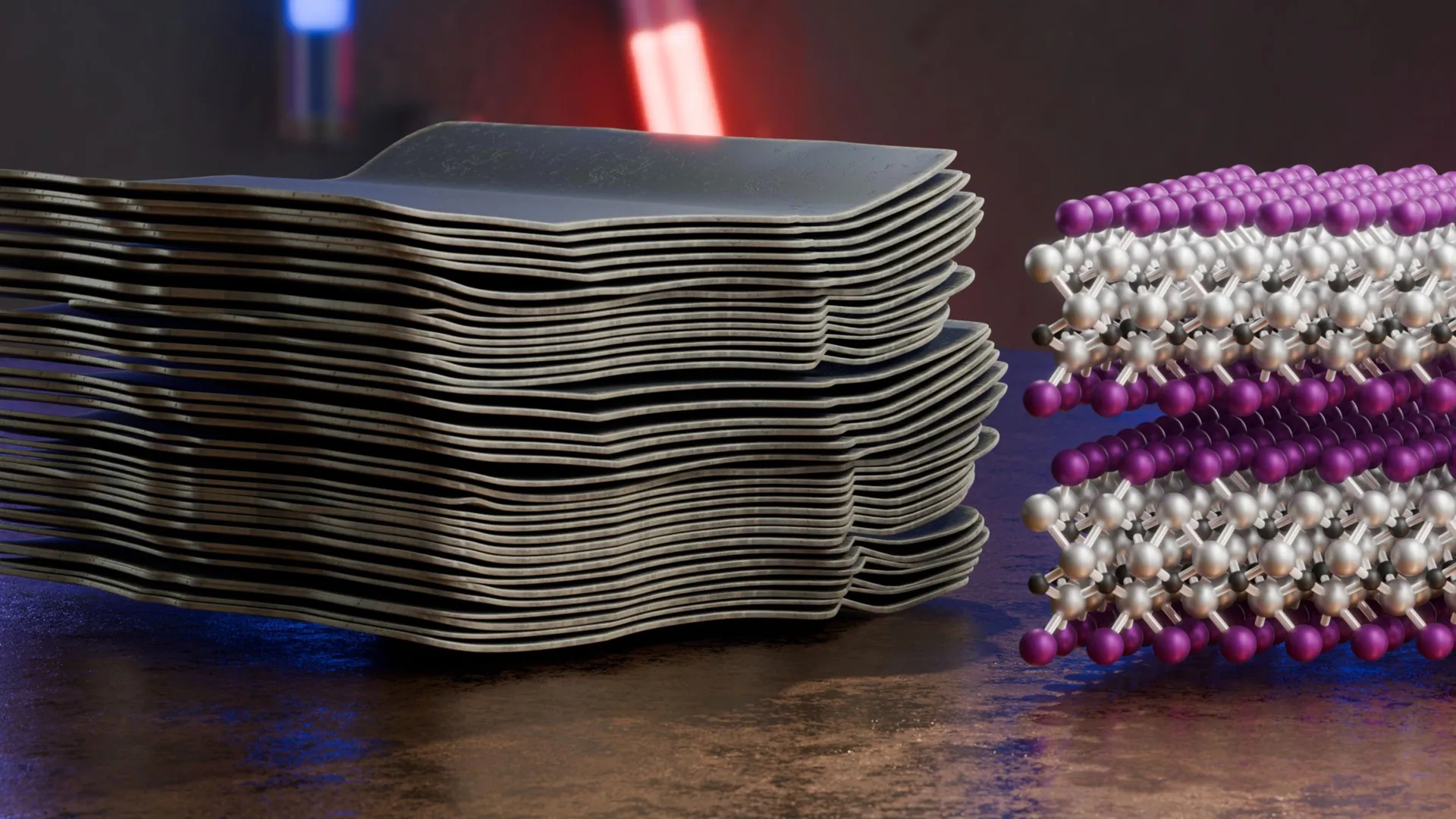
Researchers have achieved a major breakthrough in high‑tech material manufacturing that significantly improves the conductivity of ultra-thin MXenes. This advancement could lead to faster electronics and more sensitive sensors in various applications.
MXenes are a class of two-dimensional materials known for their excellent electrical conductivity and mechanical strength. They are increasingly used in electronics, energy storage, and sensor technologies. The new manufacturing process enhances electron flow across ultra-thin layers, boosting performance without adding bulk.
“Our method allows MXenes to conduct electricity far more efficiently,” said a lead scientist. “This could transform how we design next-generation devices.”
The research team applied a novel synthesis technique that aligns MXene layers at the atomic level. This alignment reduces resistance and allows electrons to move faster, improving overall conductivity. Lab tests showed significant gains compared to previously produced MXenes.
Enhanced conductivity in MXenes can impact a wide range of technologies. In electronics, it enables faster processors and smaller, more energy-efficient devices. In sensor technology, the materials can detect signals more accurately, opening doors for applications in healthcare, environmental monitoring, and wearable devices.
Analysts say the breakthrough may also benefit energy storage systems. MXenes are used in supercapacitors and batteries, where higher conductivity can improve charge and discharge rates, extending device lifespans and efficiency.
The research demonstrates that precise control at the atomic scale can unlock new capabilities in materials science. By combining advanced manufacturing techniques with MXene chemistry, scientists have created materials that outperform traditional metals and semiconductors in specific applications.
This innovation comes as electronics and IoT devices continue to demand faster, smaller, and more efficient components. MXenes with improved conductivity offer a path to meet these demands while maintaining stability and flexibility.
Industry observers suggest that commercial adoption of high-conductivity MXenes could accelerate innovation in consumer electronics, wearable tech, and smart sensors. Faster devices with lower energy consumption could become the new standard, reshaping the technology landscape.
Environmental benefits are also noteworthy. More efficient electronics and sensors reduce energy use and material waste, aligning with sustainable technology goals. Researchers are optimistic that this approach could lead to greener, high-performance devices.
The team plans to scale up production and explore integration with existing electronic components. This step is critical for bringing the technology from the lab to real-world applications.
Experts believe that breakthroughs like this could redefine expectations for material performance. By enhancing conductivity without increasing size or weight, MXenes may become a core component in future electronics, sensors, and energy systems.
As technology continues to advance, materials like MXenes will be key to unlocking faster, more efficient, and sustainable electronic solutions. This breakthrough marks a significant step toward that future.