A Renewed Offer in a Changed World
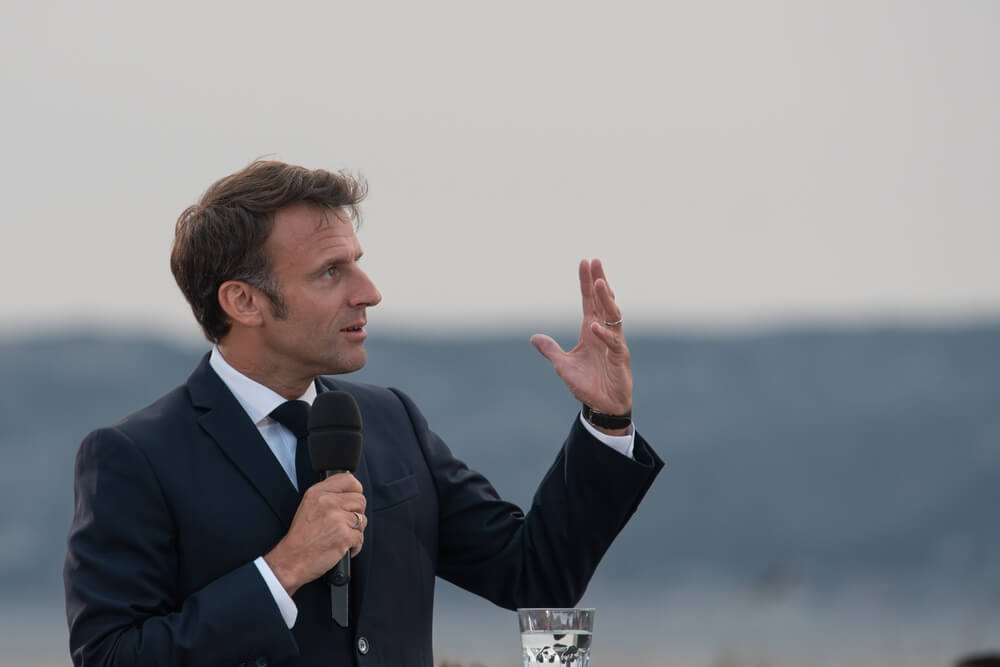
President Emmanuel Macron is set to outline how France could contribute more directly to Europe’s nuclear deterrence, reviving an idea that initially gained little attention in 2020. Speaking from the Île Longue peninsula — home to France’s four nuclear-powered ballistic missile submarines — Macron is expected to stress that any expanded role for France would complement, not compete with, the protection provided by the United States.
Back in 2020, Macron floated the idea of involving interested European partners in discussions and exercises linked to France’s nuclear doctrine. At the time, the proposal was largely overlooked. Today, however, shifting geopolitical realities have given it new relevance.
Rising Interest Across Europe
Europe’s strategic outlook has changed dramatically since Russia’s full-scale invasion of Ukraine and the return of Donald Trump to the White House. The war exposed Europe’s defence vulnerabilities, while political developments in Washington have led some European leaders to quietly question the long-term reliability of the US security guarantee.
Recent tensions — including Trump’s remarks about potentially using force against NATO ally Denmark over Greenland — have further fueled debate, even as European officials publicly reaffirm confidence in the transatlantic alliance. At the same time, the US has indicated it may shift more military focus toward the Indo-Pacific, raising uncertainty about its future presence in Europe.
Against this backdrop, Macron confirmed earlier this month at the Munich Security Conference that he has engaged in “strategic dialogue” with German Chancellor Friedrich Merz and other EU leaders about aligning nuclear doctrines. French officials describe a “growing interest among partners,” while insisting the initiative would not rival NATO’s framework.
No Arms Race, But Strategic Clarity
France maintains a doctrine of “strict sufficiency,” meaning it keeps only the number of nuclear warheads it deems necessary to deter aggression. Its estimated arsenal of around 300 warheads is far smaller than those of the US and Russia, which each hold several thousand.
French officials emphasize that Paris is not seeking to enter an arms race, but rather to ensure it retains the capacity to inflict unacceptable damage on any adversary. Meanwhile, NATO Secretary General Mark Rutte and EU Defence Commissioner Andrius Kubilius have cautioned that replacing the US nuclear umbrella outright would be prohibitively expensive and time-consuming.
France has already deepened cooperation with the UK, Europe’s only other nuclear power, through the Northwood Declaration signed last summer. The two countries now coordinate more closely via a Nuclear Steering Group and take part in each other’s exercises — a sign that Europe’s nuclear conversation is evolving, even if its final shape remains uncertain.