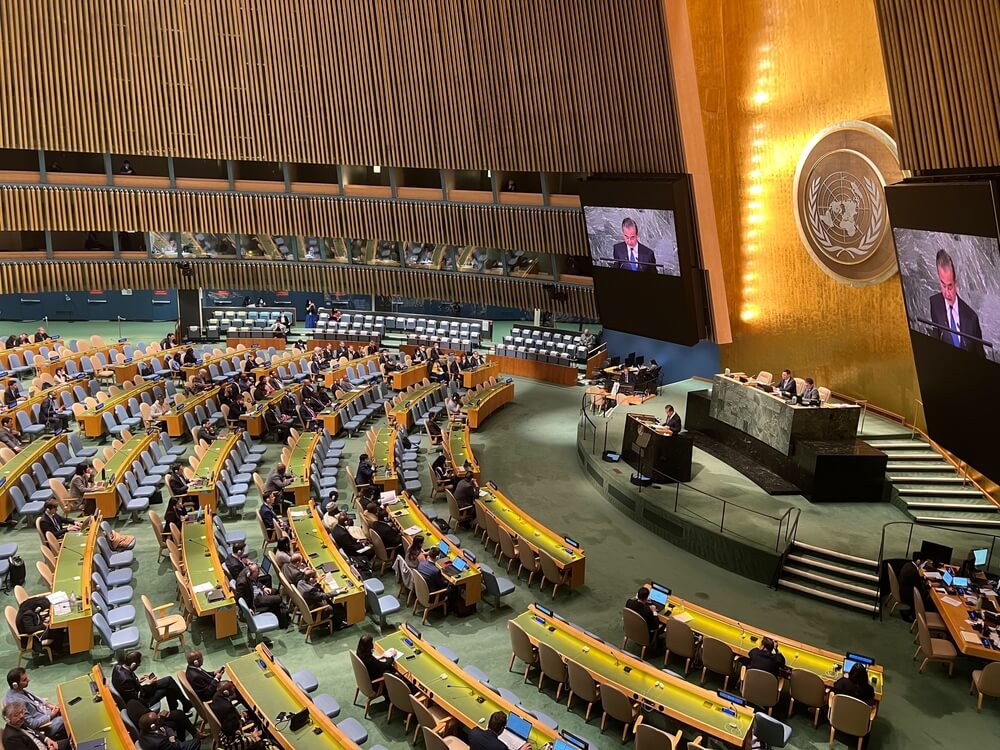
The United Nations has established a 40-member international panel to study the risks and opportunities of artificial intelligence, despite opposition from the United States. The decision comes as former AI employees and experts raise alarms over the pace and management of AI development.
UN Secretary-General Antonio Guterres called the move a “foundational step toward global scientific understanding of AI,” saying the panel will provide independent, evidence-based insight that allows all member states, regardless of their technological capabilities, to participate on an equal footing.
The General Assembly approved the panel with a vote of 117–2. The United States and Paraguay opposed the measure, while Tunisia and Ukraine abstained. Russia, China, and many European countries supported it.
A New Scientific Body for AI Oversight
The Independent International Scientific Panel on Artificial Intelligence will issue an annual report analyzing AI’s risks, potential benefits, and broader societal impacts. The UN describes it as the first global scientific body of its kind, aimed at providing impartial guidance rather than enforcing regulations.
Panel members were selected from over 2,600 applicants through an independent review process involving several UN bodies and the International Telecommunications Union. Each member will serve a three-year term. Europe holds 12 seats, including representatives from France, Germany, Italy, Spain, Poland, Belgium, Finland, Austria, Latvia, Turkey, and Russia.
Industry Voices Warn of Growing Risks
Concerns about AI are growing among those who helped build it. Mrinank Sharma, a former safety researcher at Anthropic, warned in an open letter that the rapid development of AI, combined with other global crises, “puts the world in peril.”
Similarly, former OpenAI researcher Zoe Hitzig told the New York Times she has “deep reservations” about the direction of her former company. Prominent figures like Dario Amodei, Sam Altman, and Steve Wozniak have also publicly voiced concerns about the potential risks AI could pose if left unchecked.
U.S. Criticism and International Debate
The United States has criticized the panel, with its representative Lauren Lovelace calling it “a significant overreach of the UN’s mandate and competence” and asserting that “AI governance is not a matter for the UN to dictate.”
Supporters counter that the panel is not meant to impose rules but to provide scientific guidance that helps governments make informed decisions. As AI continues to evolve rapidly, the question of how to govern its development remains a pressing global challenge.