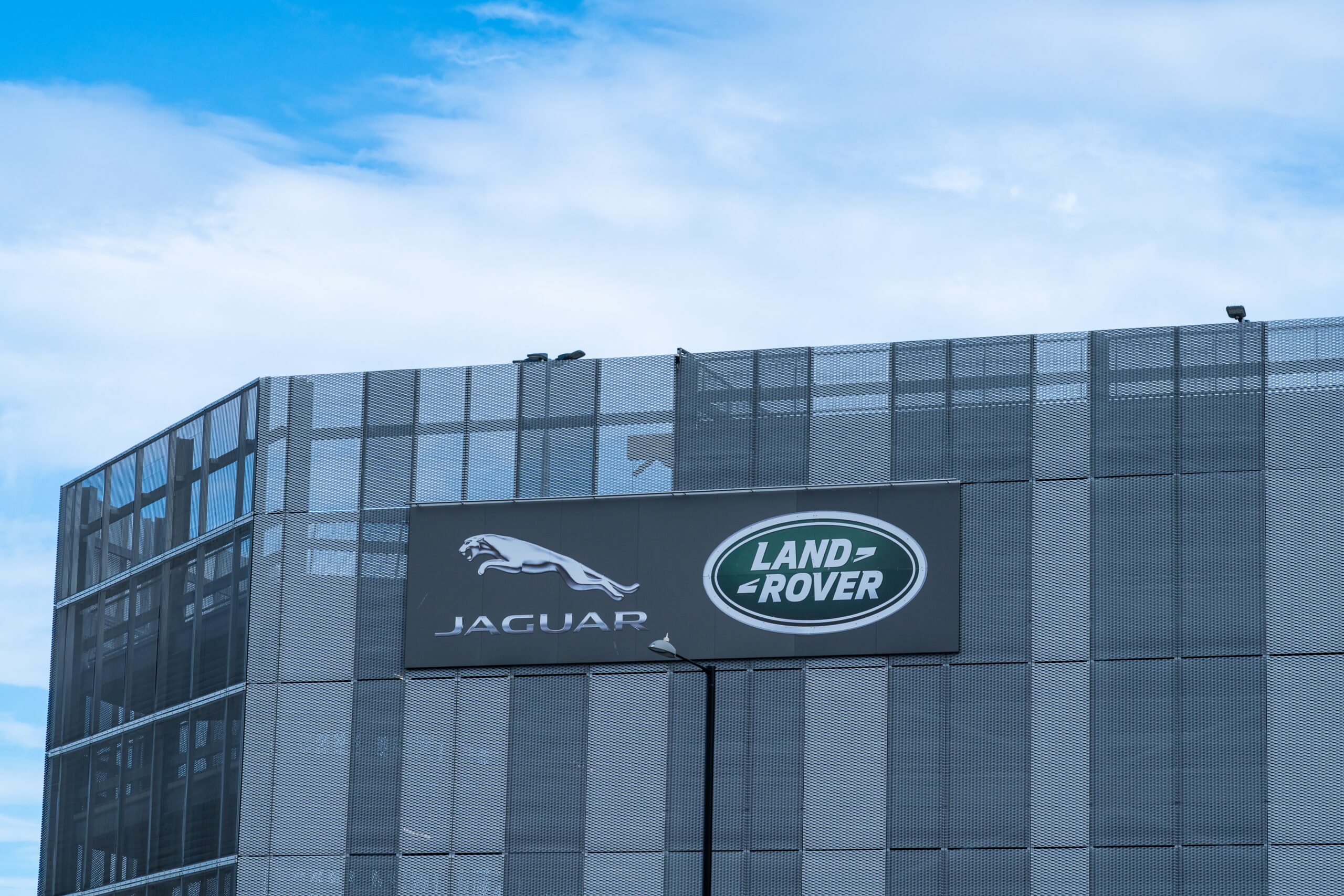
Jaguar Land Rover has begun a phased restart of its UK and international factories, more than a month after a major cyber-attack forced the carmaker to suspend global operations. The British manufacturer, which employs around 34,000 people in the UK, described the restart as a crucial step in its recovery, while revealing that sales had fallen sharply in a “challenging quarter.”
The attack, which struck on 31 August, crippled JLR’s IT systems and halted production at key sites including Solihull, Wolverhampton, and Halewood. Retail operations worldwide were also disrupted, with suppliers unable to access the company’s automated payment systems for weeks.
JLR confirmed that the gradual restart began on Wednesday across several West Midlands sites, including the engine manufacturing centre in Wolverhampton and the battery assembly plant at Hams Hall near Birmingham, which produces power units for electric vehicles. Work has also resumed at its stamping and body shops in Castle Bromwich, Halewood, and Solihull, as well as at logistics centres supplying components to global production lines.
Production in Nitra, Slovakia — home to the Defender — will restart shortly, while Range Rover and Range Rover Sport lines in Solihull are expected to return to full operation this week. An update on the Halewood plant in Merseyside will follow soon.
Chief executive Adrian Mardell called the restart “an important moment” for the company. “We know there is much more to do, but our recovery is firmly under way,” he said, praising the efforts of staff who helped restore operations.
JLR’s quarterly results, released on Tuesday, reflected the impact of the shutdown. Retail sales dropped 17% year on year to 85,495 vehicles in the three months to 30 September, while wholesale deliveries fell by 24%. The company cited production stoppages, the planned wind-down of legacy Jaguar models ahead of a new launch, and US tariffs that affected exports.
Sales declined across all major markets: down 32% in the UK, 12% in Europe, 9% in North America, 22% in China, and 16% in the Middle East and North Africa.
To stabilize its supply chain, JLR has introduced a new short-term financing scheme aimed at easing pressure on small and medium-sized suppliers. Under the scheme, qualifying suppliers will receive a majority prepayment soon after placing an order, followed by final payment upon invoicing — a dramatic improvement over the typical 60-day post-invoice payment period.
“Our suppliers are central to our success,” Mardell said. “We are using the strength of our balance sheet to support their cashflows and ensure a smooth return to full production.”
The British government has pledged a £1.5bn loan guarantee to support the automotive supply chain, though the funds have not yet been released. Business secretary Peter Kyle welcomed JLR’s progress, calling the restart “very welcome news for workers and suppliers” but warned that smaller firms “remain under pressure.”
He added: “My focus will remain on helping JLR resolve this cyber incident, make further progress towards restarting production, and support the long-term health of our automotive supply chain.”
JLR’s full return to normal operations is expected over the coming weeks as systems are restored and supplier networks stabilize. The company said its priority now is ensuring production continuity while strengthening cybersecurity to prevent future disruptions.